
Greater Exmoor Shoots Association joins Aim to Sustain assurance scheme
Twenty shoots who are members of the Greater Exmoor Shoots Association (GESA) have joined the Aim to Sustain Game Assurance Scheme.

Get information on the legal shooting season for mammals and birds in the UK.
Apply for funding for your project or make a donation today

Comprehensive information and advice from our specialist firearms team.

Everything you need to know about shotgun, rifle and airgun ammunition.

Find our up-to-date information, advice and links to government resources.

Everything you need to know on firearms law and licensing.
All the latest news and advice on general licences and how they affect you.
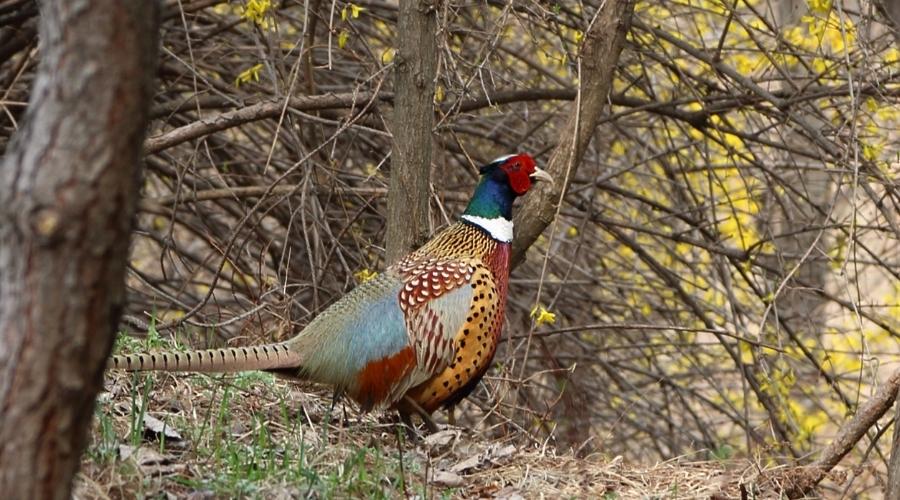
BASC has labelled the RSPB’s call to restrict the release of gamebirds to stop the spread of avian influenza as ignoring the evidence.
The RSPB is banging the drum for employing “a precautionary approach to all possible vectors of this deadly new virus to our wildlife population”, focusing its attention on gamebird release. However, it does so without any evidence to back such a move. The organisation’s release to the press admits this, saying the “spread from pheasants to wild birds has not yet been confirmed scientifically”.
In response, Glynn Evans, BASC head of game and gundogs, said: “For a national conservation charity, this campaign shows a fundamental lack of understanding of avian influenza, the government’s strategies to combat it, or how gamebird release is managed. The RSPB has failed to present a single piece of evidence to support their call and ignored the substantial role shooting plays in the countryside.
“Shooting is worth £2 billion to the UK economy, providing the equivalent of 74,000 full-time jobs. It is a significant contributor to conservation, rural jobs and the local economy.
“For a national conservation charity, this campaign shows a fundamental lack of understanding of avian influenza”
“This year’s outbreak of avian influenza is of serious concern and BASC and other representatives of the shooting sector have been working closely with Defra, the devolved administrations, and a wide range of stakeholders to ensure all necessary actions to reduce the transmission of avian flu are taken. The RSPB would better serve their members by doing likewise.”
Senior government wildlife experts, sceptical about the RSPB’s case, have said that there is too little evidence to substantiate its demands.
Avian influenza (AI) is spread by wild birds, not by gamebirds bred in captivity and then released into the wild. Should there be an outbreak of AI on a game farm, the birds within that farm cannot be released.
The RSPB has overlooked this process in its call to halt the release of “potentially infected captive birds, to limit the further catastrophic spread of avian influenza in wild birds.”
Gamebird releasing is included in the APHA risk assessment on High Pathogenicity Avian Influenza (HPAI) in housed or non-housed poultry flocks and captive birds.
The RSPB has also listed potential transmission links such as supplementary feeding and through human disturbance.
The irony in their campaign is that if any precautionary approach were to be taken forward, consideration of the domestic use of garden bird feeders and bird baths would be required, so too the continuation of allowing public access to nature reserves.
The RSPB relies on shooting’s efforts to help conserve species at risk. This campaign is deeply damaging to the positive and progressive partnership work being undertaken at ground-level.
Twenty shoots who are members of the Greater Exmoor Shoots Association (GESA) have joined the Aim to Sustain Game Assurance Scheme.
BASC has announced today a decision to prepare legal proceedings against Defra over its withdrawal of GL43.

Game shooting in Wales is under attack. Read our guidance and background information and complete the consultation today.
We use cookies to improve your experience on our site. By using our site, you consent to cookies.
Manage your cookie preferences below:
Essential cookies enable basic functions and are necessary for the proper function of the website.
These cookies are needed for adding comments on this website.
Google reCAPTCHA helps protect websites from spam and abuse by verifying user interactions through challenges.
Google Tag Manager simplifies the management of marketing tags on your website without code changes.
Statistics cookies collect information anonymously. This information helps us understand how visitors use our website.
Clarity is a web analytics service that tracks and reports website traffic.
Service URL: clarity.microsoft.com (opens in a new window)
You can find more information in our Cookie Policy and .