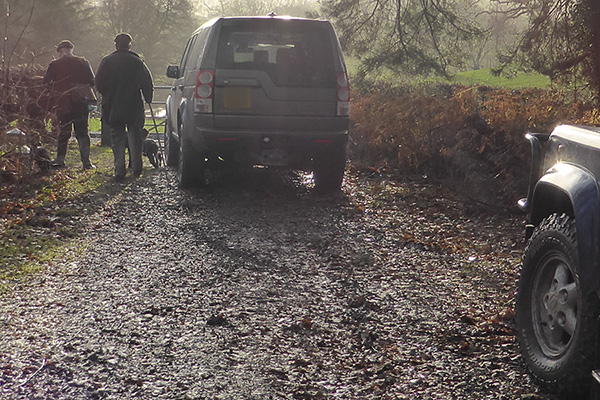
The use of red diesel for shoot transport
Many shoots transport the guns or beaters so it is important that all shoots are made aware of the restriction on using red diesel.

Get information on the legal shooting season for mammals and birds in the UK.
Apply for funding for your project or make a donation today

Comprehensive information and advice from our specialist firearms team.

Everything you need to know about shotgun, rifle and airgun ammunition.

Find our up-to-date information, advice and links to government resources.

Everything you need to know on firearms law and licensing.
All the latest news and advice on general licences and how they affect you.
Home » Gamekeeping » Land management » Deadwood in woodland
Woodlands provide habitats for many quarry species and shooting activities; however, they are also vital for storing carbon and supporting biodiversity in our landscapes.
Woodlands can be managed to promote both conservation and shooting interests through a number of techniques, one of which is creating and maintaining deadwood habitats.
The rotting wood from dead and dying trees, known as deadwood, plays a vital role in woodland health and is often overlooked or worse still, tidied up.
Keeping deadwood can provide a huge number of benefits to gamebirds, highly specialised species and general wildlife.
The government has a long-term commitment to protecting ancient woodland within the UK, a type of habitat that is rich in deadwood alongside very old native trees and the species they support.
Working with natural processes is a cost-effective, low-intensity way of improving woodland and soil health.
Deadwood should be considered in most woodland management and although its impact and change to the environment is slow, it is a long-lasting asset.
Shoots are well placed in being able to assist with protecting our ancient woodlands and in doing so, highlighting how shooting and conservation are so intrinsically linked.

Insects in deadwood act as a good food source for birds

Deadwood and brash piles create shelter and flush points for gamebirds

Deadwood features provide nesting and roosting habitat

Rotting wood returns nutrients to the soil and improves soil health
Deadwood comes in many different forms, from fallen timber decaying on the ground, dead limbs in the canopy, to rotting cores of ancient trees.
Deadwood has, historically, been removed from woodlands due to felling and extraction for timber production and firewood or to improve access, appearance and health. However, it plays a vital role in all woodlands and should be retained where possible and safe to do so.
As wood rots and decays, it passes nutrients back into the soil, in turn providing nourishment for growing plants and fungi, almost like a slow-release fertiliser.
Without the cycling of nutrients from fallen leaves and rotting wood, woodland soils would run out of these resources that are essential for plant growth.
As trees grow, they lock carbon into their structure. Deadwood therefore acts as a carbon store until it decays and is absorbed back into the soil.
Deadwood, particularly large pieces, also provides a unique habitat. The decaying structures create ‘microhabitats’ – tiny areas of different environments – for plants, fungi and animals to live and develop.
Although fungi and bark-eating beetles are the most commonly associated species, lichens and mosses, as well as cavity-nesting birds and bats, can be strongly dependent on deadwood.
The species found in and around deadwood will vary depending on the age, size and location of the wood, with different species preferring different stages of decomposition.
As a result, this decaying wood becomes a rich resource of food for wild birds and gamebirds alike. This reliable food source can enable young birds to become less dependent on supplementary feeding and have a broader, natural diet as adults, resulting in enhanced survival.
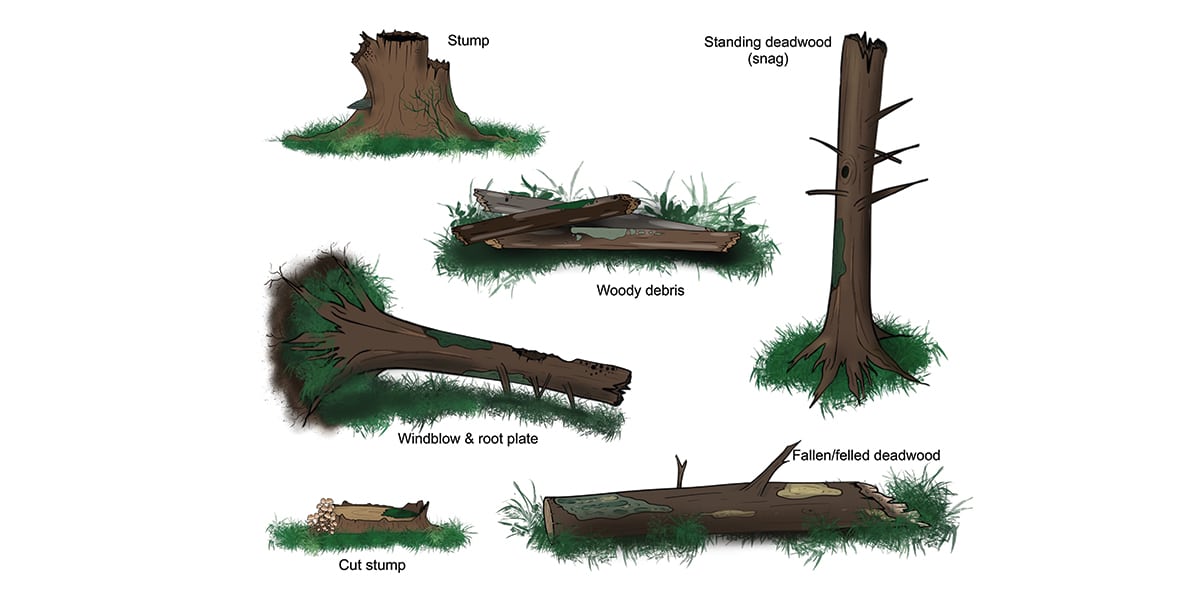
We commonly think of deadwood as rotting tree trunks and branches on the woodland floor; however, there are many more forms that deadwood can take.
Trees that die but remain upright provide valuable habitats for wildlife and are known as standing deadwood or snags. Living trees can also include dead limbs and branches and holes created by internal rot.
A huge amount of decaying wood is found underground in the form of roots and stumps.
Above-ground stumps and root-plates of windblown trees also provide rich deadwood habitat over time.
Veteran and ancient trees are characterised by the features created by dying and rotting wood such as cavities and hollows. As these trees become older, the core of the trunk, known as heartwood, begins to decay from the inside out, resulting in hollow tree trunks.
With these characteristics, dead and rotting trees can become great spots for many living things, including particular fungi and invertebrates.
Woodlands also play a vital role in controlling water flow. Deadwood is no exception and can slow the flow of water into rivers as well as create pools, dams and marshes within and around watercourses.
Deadwood beside or within watercourses enables these areas to support more biodiversity through changing light levels, temperature, water flow and sediment contained within water.
These characteristics can support fish populations through provision of habitat, as well as food through the insects contained in the wood.
Slower flows and wetter ground surrounding water bodies can also be beneficial for wading birds and waterfowl, providing soft ground for probing birds to forage, as well as supporting aquatic plants and algae.
All deadwood is good; however, where possible it should comprise native species, encouraging the native insects and plants to occupy it. Ways to estimate the optimal amount of deadwood differ.
Forest Commission best practice suggests 20m3 per hectare but some consider this to indicate a minimum required.
Common standards monitoring would suggest three fallen trees of diameter greater than 20cm and four standing dead trees per hectare is optimal. Some visualise this volume as equivalent to a truck load or the size of a Land Rover Discovery per hectare.
What is prudent for those releasing game is to substantially exceed both these recommendations.
Gamebird diets include invertebrates, especially in the late spring and summer and deadwood is an essential provider of these. Exceeding these levels not only provides for gamebirds but also addresses concerns that gamebird-taking invertebrates may have negative impacts.
Aside from getting the right volume of deadwood, there are several ways deadwood habitats can be managed:
Retaining and creating deadwood is an extremely cost-effective way to enhance biodiversity in a woodland. However, as a general rule, leaving it where it falls is best.
Deadwood does not need to be evenly spread across a woodland. Clumped and connected deadwood provides greater benefits.
Many of the species dependent on deadwood, such as saproxylic beetles (beetles that feed on dead and decaying wood) are not able to move great distances, so will benefit from a continuous supply of deadwood in one area, or well-connected patches of deadwood.
This cluster of deadwood and resulting rich food supply can be particularly important to young gamebirds, providing beetles and larvae, reducing their need to roam widely for food.
If deadwood already exists on site, it can be enhanced or expanded to make sure it persists within the woodland, ensuring there is always wood available for the plant, insect and animal life that depends on it.
The greater the diversity of age classes of deadwood (from just fallen, to almost incorporated back into the soil), the more species it can support.
Where maintenance, access work or thinning has been carried out, deadwood piles can be created from smaller branches and brushwood. Although they will decompose at a faster rate, these piles will provide habitat and shelter for small mammal and bird species as well as invertebrates.
Creating loosely stacked brush piles within relatively open woodland or at woodland edges can create artificial thickets providing shelter for partridge, pheasant and other quarry species such as woodcock.
This brash can also make good flushing points for gamebirds throughout a woodland. Avoid
chipping small branches of no economic value where possible, as the wood chip does not create good deadwood habitat.
Brush piles can also be used as a tool to protect tree stumps following coppicing or reduce access to browsing deer.
Deadwood can be used to create fencing, also called dead-hedging. By constructing fences or barriers with logs and brash, areas of new growth and planting can be protected from over-browsing by deer, trampling and disturbance.
These dead-hedges and fences can be more cost-effective than deer fencing and have
a lower visual impact on the landscape. Dead-hedges can also provide wind protection and improve shelter in a woodland when placed on the side facing the prevailing wind.
When new areas of deadwood are being created, it is important to connect them to existing deadwood habitat where possible, to encourage insects and plants to establish in the new areas. Where there is no connectivity, do not despair, it may just take longer for deadwood specialists to colonise the area.
Large-diameter deadwood is best as it will take longer to decay, providing longer-lasting habitats for invertebrates and food sources for birds and mammals. However, combining trunks and branches will result in different decomposition rates and encourage a variety of species to occupy the area.
Creating these piles of deadwood in different sizes in cool, damp environments will prevent wood drying out and encourage decomposition. Ideally, these piles will be near open spaces where adult insects such as butterflies can then access food from flowers.
When creating snags or standing deadwood, it is vital to consider the safety of those working in and accessing the woodland. Where there is minimal risk to human safety, dead and dying trees should be left standing.
You can assess and manage risk for your shooting and conservation activity by undertaking a risk assessment, which you can find here.
Standing deadwood can be created by mechanically ring-barking trees; however, trees that die naturally create better deadwood due to the slow natural processes that occur over time.
Trees can be ‘veteranised’ through artificially creating damage to tree bark that mimics natural processes such as branch breakages. This can increase the amount of deadwood features in trees.
Old and veteran trees should be identified and preserved within or outside of woodlands as they will eventually provide deadwood features without any intervention.
Consider carefully the species of tree for this technique. We would not recommend doing so with ash trees because of the pressure they are under from ash dieback and the importance of allowing uninfected trees to reproduce, for example.
Also consider the safety implications of where the tree is and where people may go, such as deadwood falling from the canopy.
These forms of standing deadwood may eventually become windblown. This should also be left in place where appropriate.
As a rule you should leave deadwood where it is; however, there are some situations when removing it or moving it within the wood is valid.
In some cases, deadwood in the canopy or on the ground can pose risks to the general public, shoot members and others who may enter the wood.
We offer general advice on risk assessments to help you assess and reduce the risks to an acceptable level.
If the decision is to take down deadwood, then the ideal is to leave it near to where it was.
Diseases in trees are generally part of a heathy woodland and how some deadwood is created.
Therefore, as a rule, there is no reason to remove diseased trees and resulting deadwood .
For example, ash dieback is triggered by a fungus which causes trees to rot from under the bark. However, removal of the dead trees does not reduce the spread of disease.
Therefore, leaving infected trees either standing or felled in situ (where safe to do so) is a great opportunity to enhance deadwood habitat.
This advice stands for most tree diseases with the exceptions of Dutch elm disease and watermark disease (on cricket bat willow).
In areas with significant floristic value or historic structures, deadwood may need to be removed to reduce damage to the site’s unique characteristics.
For example, some woodland management resulting in substantial deadwood falling or being stacked on a very rich carpet of bluebells, wood anemone and dogwood is generally undesirable.
If moving deadwood to new places is required, it can be used to create habitats elsewhere by loosely stacking wood in damp and shady environments.
Deadwood creation can enhance almost every woodland site; however, some woodlands will be better suited to deadwood accumulation, for example ancient semi-natural woodlands, riparian zones along water courses and wood pasture.
Stands where timber production is a priority, or those which are recently planted (less than 50 years old), may have less potential to create deadwood sections; however, where possible, deadwood should be retained on site.
Funding opportunities vary across the home country.
Find out more information on grants.
If you want to learn more then try the Forestry Commission Practice Guide – Managing deadwood in forests and woodlands
Many shoots transport the guns or beaters so it is important that all shoots are made aware of the restriction on using red diesel.
Everything you need to know to stay safe if your shoot, which if properly carried out is a lawful activity, is disrupted by demonstrators.
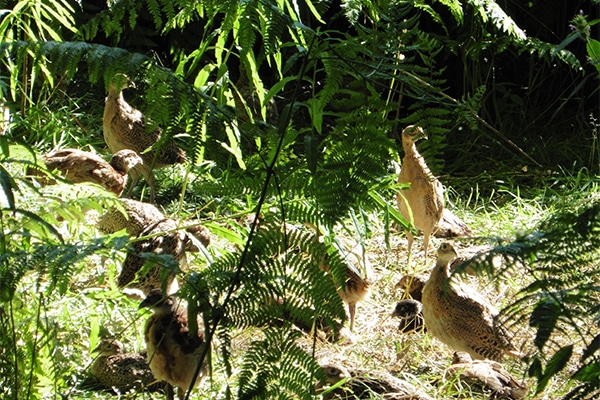
How to create a pheasant pen that meets The Code of Good Shooting Practice’s requirements.
We use cookies to improve your experience on our site. By using our site, you consent to cookies.
Manage your cookie preferences below:
Essential cookies enable basic functions and are necessary for the proper function of the website.
These cookies are needed for adding comments on this website.
Google reCAPTCHA helps protect websites from spam and abuse by verifying user interactions through challenges.
Google Tag Manager simplifies the management of marketing tags on your website without code changes.
Statistics cookies collect information anonymously. This information helps us understand how visitors use our website.
Clarity is a web analytics service that tracks and reports website traffic.
Service URL: clarity.microsoft.com (opens in a new window)
You can find more information in our Cookie Policy and .